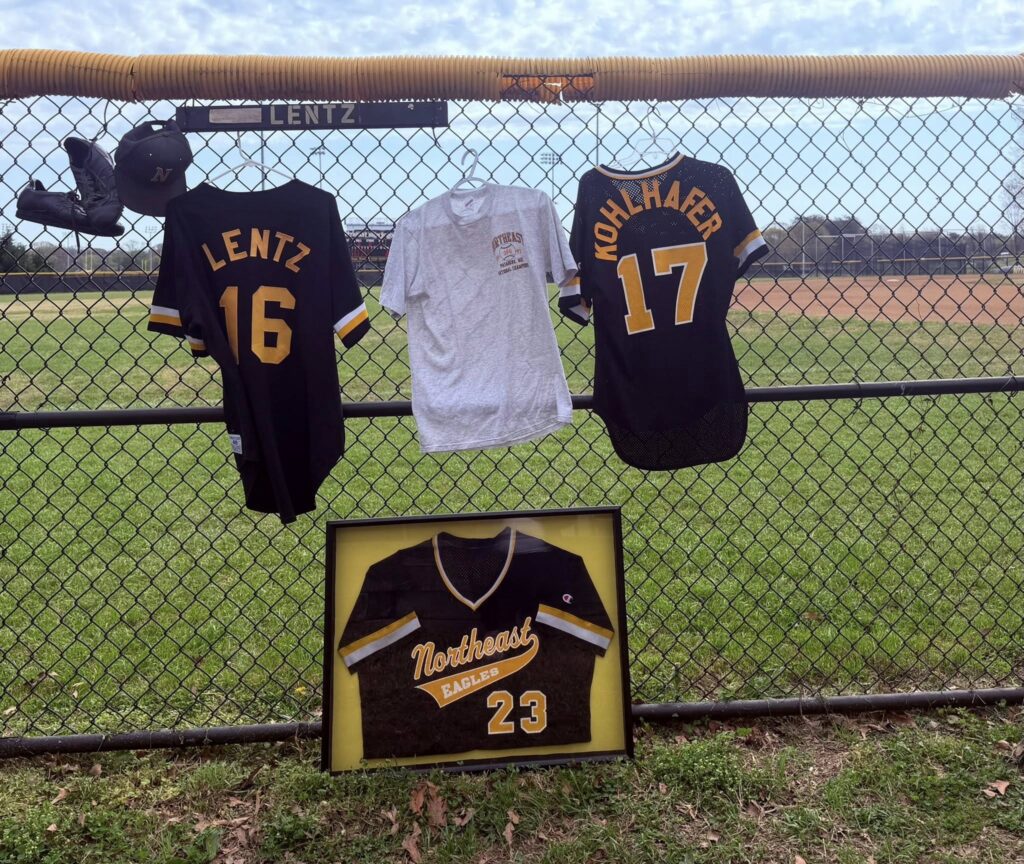



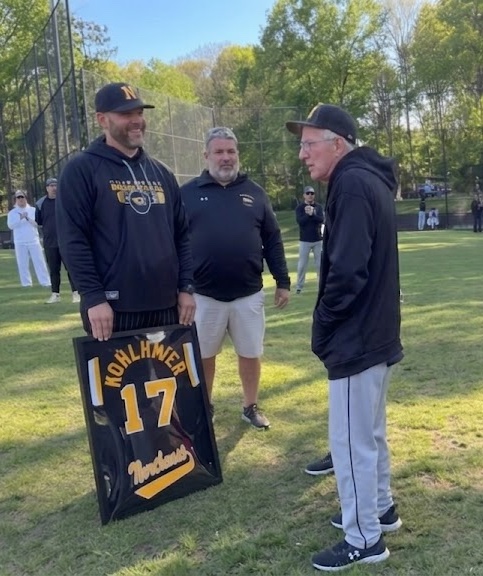
For 57 seasons, there was one constant at Northeast High School’s baseball field.
Coach Al Kohlhafer.
Generations of Eagles players knew the routine: the familiar face in the dugout, the steady voice during practice, the lessons that stretched far beyond baseball. Before that, there was wrestling season – decades of it – where Kohlhafer built one of Anne Arundel County’s most respected programs while shaping students in classrooms, locker rooms, and wrestling rooms alike.
Now, after nearly six decades at Northeast, Kohlhafer is stepping away from coaching, closing one of the longest and most influential careers in Anne Arundel County high school athletics.
But ask him about championships, records, or personal accomplishments, and he quickly redirects the conversation.
“It’s not about you,” Kohlhafer said. “It’s not about me. It’s about these kids.”
That philosophy guided his entire career.
From Baltimore City to Pasadena
Long before he became “Coach Kohlhafer,” he was a kid growing up in Irvington in West Baltimore. Wrestling was part of his family from the beginning.
“My father and brother wrestled, and so did I,” he said. “I started when I was five years old. That was the sport I just loved.”
After serving in the Navy, Kohlhafer returned home in 1969 looking for a teaching job – and more importantly, a chance to coach.
He applied in several school systems before getting a call from Anne Arundel County about an opening at Northeast High School in Pasadena.
“I’d never even heard of Northeast,” he laughed.
Still, he drove down for an interview with the school’s first principal, Harold Zastrow. Kohlhafer brought his portfolio and explained that he wanted to coach wrestling.
“He said, ‘Boy, you’re just somebody we’re looking for,’” Kohlhafer recalled.
That fall, he began teaching at Northeast. On Nov. 15, 1969, wrestling practice started.
“I never looked back,” he said.
A Partnership That Defined Northeast Baseball
Not long after arriving at Northeast, Kohlhafer was approached by baseball coach Harry Lentz about helping with the program.
“I said, ‘I’ve never really coached baseball, but I’d love to do that,’” Kohlhafer said.
That decision sparked a friendship and coaching partnership that would shape Northeast athletics for decades.
“He was my best friend,” Kohlhafer said of Lentz.
Together, the pair built powerhouse baseball teams, including the legendary 1991-92 squad that finished 24-0 and was ranked No. 1 in the nation. Northeast captured multiple county, regional, and state titles during their years together.
But Kohlhafer says Lentz’s greatest strength had little to do with baseball.
“He was spectacular in the classroom,” Kohlhafer said. “Kids just loved him.”
Lentz taught social studies and later created a class on Native American history called First Americans. Kohlhafer remembers standing outside the classroom during hall duty just to listen to him teach.
“He was so interesting,” he said. “Kids wanted to be in his class so bad.”
When Lentz died in 1993 at age 51 after being diagnosed with a brain aneurysm, Northeast lost more than a coach.
“We lost a tremendous teacher,” Kohlhafer said.
Today, the Eagles take the field at “Harry Lentz Field,” where his name still stands on the stadium sign at Northeast High School – quietly honoring the coach whose legacy continues to shape every game played there.
Though Kohlhafer was offered the head baseball coaching position afterward, he declined at first. Wrestling commitments kept him away during the critical early weeks of baseball season, and emotionally, he struggled with the idea of stepping into Lentz’s shoes.
“I thought people would say, ‘You’re no Coach Lentz,’” he said. “And they would have been 100% correct.”
Eventually, Kohlhafer stayed – because of the students.
“Every year, there were kids that just got to you,” he said. “Not just incredible athletes, but good people.”
More Than a Coach
Kohlhafer spent 43 years teaching at Northeast before retiring from the classroom around 2011. During that time, he taught business math, economics, salesmanship, history, PE, self-defense, and conditioning classes.
One of his proudest accomplishments was helping launch the school’s Academy of Finance program, which connected students with local business leaders and paid internships.
“The kids had to call the companies themselves,” he said. “They had to sell themselves and earn those jobs.”
Some students later returned from college and continued working for the same businesses years later.
For Kohlhafer, that real-world growth mattered every bit as much as athletics.
His classes – especially self-defense and conditioning – became popular among students, many of whom gravitated toward his practical lessons and old-school honesty.
“Hard work pays off,” he said. “You may not be the smartest person, but always be the nicest person.”
Lessons Bigger Than Sports
Kohlhafer’s players often remember the life lessons more than the games.
At his final home baseball game earlier this spring, former players returned to honor him. Many didn’t talk about championships or statistics.
“They talked about things I said,” Kohlhafer said. “Maybe something that changed their life in some way.”
His advice was simple, consistent, and deeply personal.
“Tomorrow is never promised,” he said. “Don’t say you’ll do it tomorrow, because tomorrow may never come.”
He urged athletes to love their parents, appreciate the people around them, and treat others with kindness.
“People remember how you acted toward them,” he said. “Those little things mean more than wins and losses.”
He also understands that for some students, athletics provide stability they may not find elsewhere.
“Sometimes that baseball field is the only sane and safe environment they’re in,” he said.
Faith, Family, and Moving Forward
At 81 years old, Kohlhafer still works in home construction, laying flooring, drywall, tile, plumbing, and brick.
“I can still put a good day’s work in,” he said with a smile.
But after decades of sacrificing winters to wrestling and springs to baseball, he finally felt it was time.
“My wife deserves so much more,” he said. “She and my daughter sacrificed so much over the years.” His daughter, Jennifer, currently works as the financial secretary at Northeast High School.
Kohlhafer and his wife recently bought a home in Florida, where they hope to spend more time walking beaches, visiting friends, and enjoying life with their two young granddaughters.
“I love coming home and seeing those grandkids run to me,” he said of his two granddaughters, Reagan and Parker. “Now I won’t have to turn around and leave for baseball practice.”
Faith has remained central throughout his life. Kohlhafer credits God for both his health and longevity and is active at Lighthouse Church, where he serves on the church security team.
“God has been so good to me,” he said. “He has truly blessed me.”
“Did You Make a Difference Today?”
One lesson from Harry Lentz stayed with Kohlhafer forever.
Early in his coaching career, Kohlhafer complained that a newspaper article about Northeast baseball mentioned everyone except him.
Lentz immediately challenged him.
“He said, ‘Is that why you’re here? To get your name in the paper?’” Kohlhafer remembered. “‘Because if it is, I want your resignation right now.’”
Then came the line Kohlhafer never forgot:
“Try to make a difference in these kids’ lives every single day.”
Today, that reminder is still written inside his locker at the field house:
Did you make a difference in someone’s life today?
After 57 seasons at Northeast, thousands of former students and athletes would likely answer that question for him:
Yes, Coach Kohlhafer did.